Our May 2023 event: What Does a Voice Coach Do, Anyway? A Glimpse into the World of Voice and Speech Coaching. A Discussion with Sonya Ross

In the May 2023 networking event, we had the pleasure of welcoming voice, speech and pronunciation coach Sonya Ross as our guest. The lively discussion revolved around voice and speech coaching, in what way it differs from other professions such as speech therapy, the diverse range of individuals who can benefit from voice coaching, the hot and controversial topic of ‘accent reduction’ (or pronunciation training), ‘native speakerism’, and the significance of choice and exploration in this field.
We decided to organise this event using a discussion-style format to initiate a conversation from the get-go. As anticipated, the attendees eagerly joined in.
We’re highlighting here a few key topics that we discussed.
What Does a Voice Coach Do, Anyway?
As Sonya explained, “voice and speech coaching is essentially helping people to make the most of their speaking voice”. But what does that actually mean in practice? We wanted to know what Sonya actually does as a voice coach.
Sonya’s approach to work is highly individualised and depends on the specific needs and challenges of each individual. The main focus is on working with healthy functioning voices and enhancing their overall function, primarily from a physical perspective.
For instance, clients may seek Sonya’s guidance when they feel that their voice lacks audibility, clarity or variety, or that their voice ‘runs out of steam’. By identifying the underlying issues, Sonya works with her clients to explore various techniques involving voice, body, and breath. Together, they seek to uncover options and discover the voice that feels the most liberated or “freest” – as Sonya puts it.
Sonya emphasised that the goal is always to create a voice that is free and open, as this promotes comfort and well-being. Tensions in the body can manifest in the voice, affecting its quality and expression. By addressing these tensions and encouraging a more relaxed and natural approach to vocal production, individuals can achieve a greater sense of vocal freedom and overall comfort.
“Don’t be limited by what’s familiar in your voice. Voice is there, you just need to learn how to work with it. There is nothing wrong with the original habits but you don’t have to limit yourself just to that.”
Sonya Ross
Who are the typical clients of a voice coach? Who seeks out and benefits from voice coaching?
Sonya works with a very diverse range of individuals, including native English speakers and speakers of English as an additional language. While their professions and sectors may vary (corporates, creatives), they all share a commonality in using their voice to communicate effectively in their respective fields, both online and in person.
Clients typically seek out Sonya because they have a clear understanding of what they want to achieve and develop in terms of their voice and communication skills. A common request is to improve the ‘tone’ (quality) of their voice. As Sonya explains, she guides clients to access their fullest, freest voice, and the voice coaching sessions are never about slapping an ‘ideal tone’ on top.
English pronunciation is another very common request, though Sonya points out that it’s often associated as part of English language teaching, which she doesn’t do (anymore).
Regardless of their backgrounds or areas of expertise, these individuals understand the importance of vocal expression and its impact on their professional success. They seek Sonya’s expertise to unlock their potential and further develop their voice to effectively communicate their ideas and connect with their audience.
As a voice coach, where does Sonya stand on the debate of ‘accent reduction services’?
This topic has brought up a lively discussion among the attendees.
As Sonya explains, she doesn’t like nor use the term ‘accent reduction’, as she says: “We are not reducing anything but we are gaining a new choice. I think it’s all about choice. Of course, the accent variety is wonderful and it would be so boring if we all sounded (or tried to sound) the same.”
“We are not reducing anything but we are gaining a new choice.”
Sonya Ross
Pronunciation training is sometimes referred to as ‘accent reduction’. Everybody has accents, including the teacher. Any ‘standard’ accent is an accent. Sonya mentioned that teachers and learners of many languages easily refer to and aim for an agreed ‘correct’ or standard pronunciation. However, it’s different for English because of the position it holds as an international default for business and travel and therefore putting standards on it is often quite challenging and inappropriate.
Sonya then explained that the ultimate goal for most people these days is clear speech. We can be clear in any accent, no matter what our accent is.
We addressed many other hot topics such as the challenges of marketing a voice coach’s services (e.g. what clients search for vs what a voice coach actually offers), society’s projections and expectations, native speakerism in the language industry, intonation vs rhythm, and how a voice coach measures success.
Finally, we asked Sonya about the message she wants to convey through her work.
CHOICE! Vocal choice! Explore new choices, if you feel genuinely inclined to do so. It is quite fun and quite empowering. There are aspects of your voice that you may not realise you had.It can be quite profound to bring out what’s within you, within your voice.
Sonya Ross
Sonya’s post-event reflections, in her own words
To communicate effectively in speech, we need to have a consensus of recognisable meaningful pronunciations, or at least a set of them, because taking ‘freedom’ to its logical conclusion would mean that the recognisable language ceases to exist. (I realise that is a bit of a philosophical statement!) But the reality is that we can cope with a high degree of freedom and variety within the recognisable frameworks of the language, in English maybe more than some other languages because of its position in the world and its many varieties. For that reason, I don’t think we as teachers should be automatically applying modern Received Pronunciation (RP) or any other accent as the target, but context is inevitable and as I say a lot, the learners often appreciate and need a framework.
Nobody should be told they have to ‘work on their accent’. I find that quite shocking and wouldn’t work with someone ‘sent’ to me in that way. I expect that these days, such a comment would be viewed and dealt with as discrimination by HR, but that may depend on the organisation and the location. Such discrimination could, of course, manifest in more subtle ways, and is definitely possible that people could feel obliged to speak a certain way to ‘fit in’. In my initial conversations with potential clients, I try to get to the bottom of their motivation to work on pronunciation to make as sure as possible that it’s internal and not coming from a place of obligation or limitation. Some express frustration that when they are told (by well-intentioned people) that they ‘shouldn’t’ work on pronunciation, it feels that their questions and curiosity don’t really matter and that pronunciation work isn’t ‘for them’, which can feel like gatekeeping. I’d say that for everyone I work with, there is genuine curiosity and joy in exploring pronunciation, and as a bit of a geek for the subject myself, I’m happy to help!
We would like to express our sincere gratitude to Sonya and all the participants of this event. Your active involvement and engagement made it truly exceptional. Thanks to your insightful comments and questions, what was initially planned as a 40-minute Q&A session turned into an engaging 70-minute discussion.
What are your thoughts after reading this?
Leave a comment below and let’s continue the conversation in the comments area by fostering meaningful connections and conversations within our professional community.
Also, we look forward to welcoming you to our upcoming event in June, in person this time! To stay updated on our latest news and event dates, do subscribe to our email list.
About our Guest
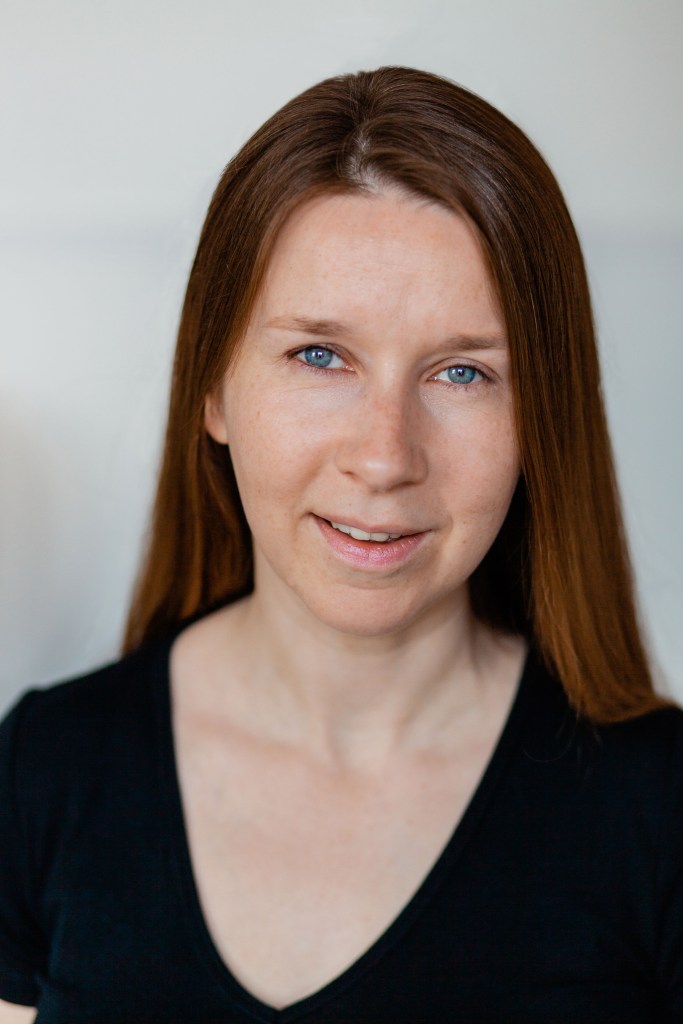
Sonya Ross
Sonya Ross is a Voice, Speech and Pronunciation trainer based between London and Hastings, UK and online. Since completing her MA in Voice Studies from the Central School of Speech and Drama in 2006, Sonya has helped thousands of professionals from a variety of backgrounds to make the most of their speaking voice. She regularly works with actors, artists, entrepreneurs, executives, finance professionals, lecturers, managers, musicians, retired people, students and teachers – people who speak English as a first and an additional language alike. While most of her coaching takes place on a one-to-one basis, this year she launched her first round of Pronunciation Jump-Start: an online group pronunciation course focused on clear speech and rhythm.
Before qualifying as a voice coach, Sonya spent a few years as a Business English trainer in France, which gave her a solid background in the world of language training, as well as a first-hand insight into the language learner’s experience as she worked on her French – something she continues with to this day.
She is originally from the Highlands of Scotland and enjoys exploring accents. In her free time, she walks, sings*, reads, writes, travels and stares at the sea.
*She is not a singing teacher in any way – just enjoys singing for fun!
Sonya is a member of the Voice and Speech Trainers Association (VASTA) and the International Phonetic Association.
Do connect with Sonya and follow her work using the below links:
- Website: https://vocalchoice.co.uk/
- LinkedIn: https://www.linkedin.com/in/sonya-ross-voice-pronunciation-accent-coach/
Instagram: https://www.instagram.com/vocalchoicelondon/
Categories
 Language Professionals' Networking Event